Fatal Claw How to Beat Saitin
First real boss — break the regeneration loop with short punishes.
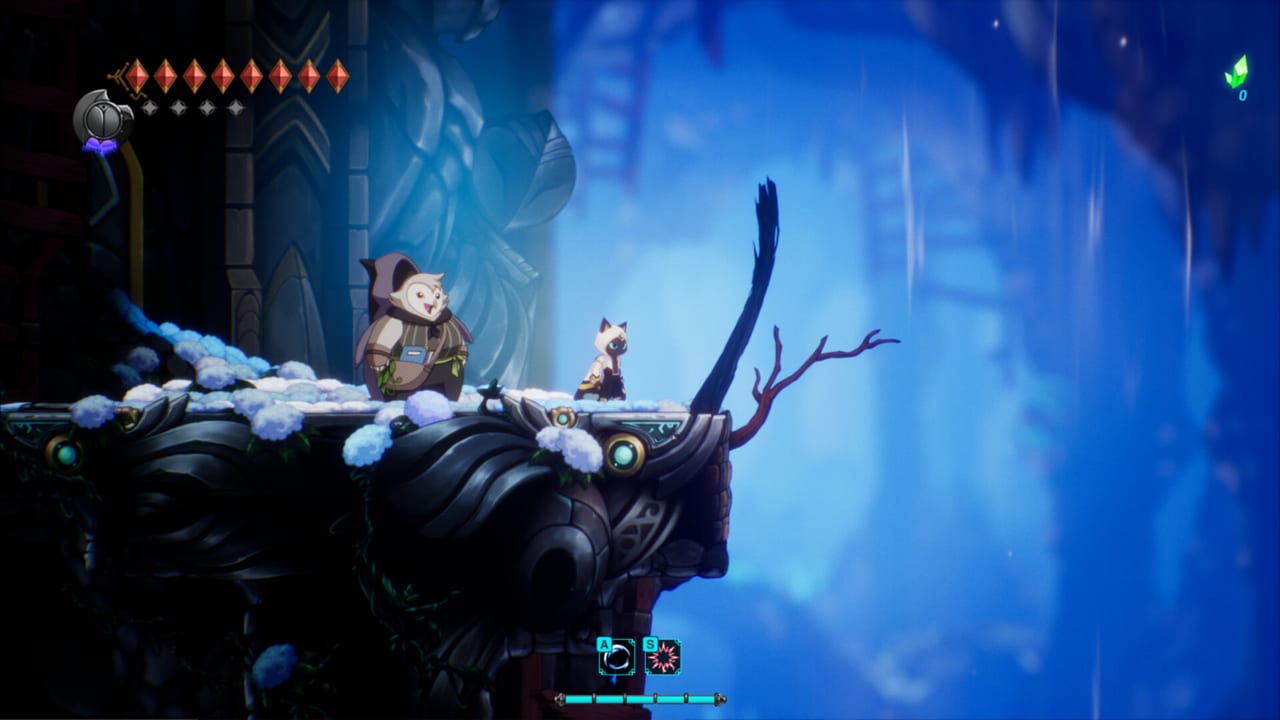
Saitin is the first named boss in Fatal Claw. The community guide identifies it as a corrupted plant-like enemy encountered at the end of Moss Cave after the Ain conversation. Steam stamps the win as Weed Control. This page is the fight essay. Pair it with How to Beat Early Bosses for the broader early-game picture, and with Bosses Hub for the full encounter index.
What makes Saitin different
Saitin is not a raw HP race. The community guide verifies that regeneration plus a close-range spike response makes this fight a lesson in short, controlled punish windows. Long close-range strings feed the spike response and let health regenerate between swings. That is the central mistake to avoid.
Saitin’s arena is a compact underground chamber with minimal obstacles. The floor space gives you room to retreat but offers little cover, so positioning discipline matters more than environmental usage. The boss occupies the center of the room and does not chase aggressively — it waits for you to overcommit, then punishes. This is the psychological core of the encounter: Saitin is a trap for aggressive players.
The regeneration loop
The fight rewards patience over aggression. Two-hit punishes or ranged mana attacks keep the health bar moving downward without triggering the spike counterattack. If you commit to a long combo string, Saitin recovers enough to undo your progress. This is the lesson the fight teaches before you reach Irbes clones or Ortrinde steel.
The spike counterattack is Saitin’s most dangerous move. When you linger in close range beyond two hits, Saitin triggers a rapid thorn or vine burst that catches mid-combat rolls and catches players trying to chain attacks. The hitbox is wide and the recovery after the burst is short, meaning a whiffed roll leaves you open for several seconds of continued damage. The burst is telegraphed by a brief glow on Saitin’s body — roughly 300 milliseconds of warning. Experienced players use that window to back away rather than roll through the burst, because rolling into it extends your vulnerability window.
Practical rhythm:
- Enter for a short opening and stop after a steady two-hit punish.
- Back out before another close-range string triggers the spike response.
- Use ranged mana attacks when closing distance would force an unsafe string.
- Maintain controlled pressure until the health trend stays downward.
Saitin’s attack windows are symmetrical. After a ground slam or vine sweep, Saitin has roughly 800 milliseconds of recovery — enough for two quick claw strikes or one charged mana blast. After the spike burst, the recovery is closer to 600 milliseconds, which favors a single quick attack. Do not attempt a third hit after any opener; the third hit is exactly what triggers the regeneration loop and the counterattack.
Movement and positioning
Kisha’s starting claw range is sufficient for all Saitin attacks if you position correctly. The key habit to develop is facing Saitin directly before attacking. The claw’s range is a forward cone, and missing the angle means losing damage and potentially eating a counter. When Saitin performs its ground slam attack, the safe zone is either immediate close range (inside the slam radius) or well outside it — mid-range rolls into the slam are the most likely to get caught.
Mana management matters even at this early stage. If you have any ranged mana options, treat them as your primary tools for the first third of the fight while you learn Saitin’s attack rhythm. Switching to melee once the health gap is established gives you a faster kill without giving Saitin regeneration time.
Post-ability context
This fight happens early, before Blink is a comfortable reposition tool. Do not assume you need wall-climb or glide for this arena — those are later movement tools. Saitin is reachable with basic movement plus the discipline to stop a combo before the third hit.
After the win: Weed Control achievement pops. The game then tracks Saitin’s Countermeasure absorption. Do not leave the arena immediately after the kill — interact with the defeated Saitin so Kisha absorbs the named countermeasure. That is the confirmed progression step this fight gates. The absorbed countermeasure may have practical use in later Moss Cave sections, so treat it as a priority pickup rather than a bonus.
Region context
Moss Cave is the early region. Lower Moss Cave is the 1.0 addition with Jibanam Trees and tribe. Saitin lives in the original cave band, not the deeper 1.0 return. For the cave geography, see Moss Cave. For the broader early route, see Getting Started.
Difficulty and accessibility
Saitin is a tutorial-grade encounter in mechanical terms. If you are bouncing repeatedly, treat it as a signal to check healing item inventory rather than a sign you need harder Cabitz. Difficulty sliders are always valid if an early fight feels miscalibrated for your setup. The regeneration loop is the intended difficulty gate — once that clicks, the fight resolves consistently.
No invented HP values. No fake phase names. Pattern discipline and short punishes are the confirmed tools.
Frequently Asked Questions
Quick answers to the most common questions.
Where is Saitin?
End of Moss Cave after the Ain conversation. It is the first named boss and the Weed Control achievement.
Why does Saitin keep healing?
Long close-range strings trigger regeneration and spike counterattack. Use two-hit punishes or ranged mana attacks instead.
What is Saitin's Countermeasure?
After defeating Saitin, interact with the absorbed enemy to gain Saitin's Countermeasure. It is a named countermeasure, not a generic loot drop.
Do I need Blink for Saitin?
No. Basic movement and claw range are sufficient. Blink and wall-climb come later.
Is Saitin harder than Irbes?
No. Saitin is the first real lesson in controlled punishes. Irbes is later and adds clone mechanics.